If you’ve started pricing sunrooms in Texas, you’ve probably hit the “three season” vs “four season” question. The names sound similar. The products are not.
A three season room costs roughly half what a four season room costs. It’s also unusable in a Houston July. That trade-off — comfort months vs. up-front dollars — is the whole decision.
This guide covers what each one actually is, how the numbers break down for 2026, whether a three-season room survives a Gulf Coast summer, and a decision checklist by use case. If you’ve already read our sunroom cost breakdown, this goes deeper on the type-selection question.
What a Three Season Room Actually Is (and What It Isn’t)
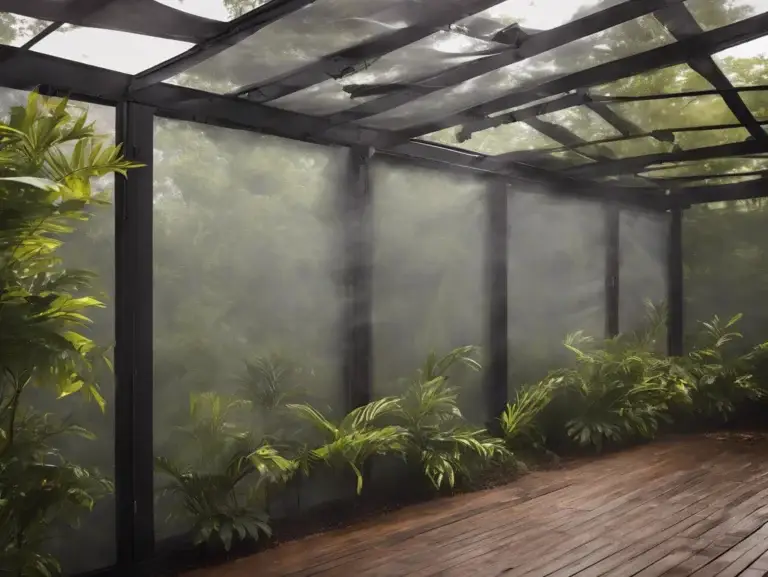
A three season room is an outdoor room built for mild weather. The frame is aluminum. The walls are either screen or single-pane glass. The roof is lightly insulated or uninsulated. There is no HVAC — airflow, ceiling fans, and portable heaters are the climate control.
What it is:
- A bug-free, debris-free outdoor room from October through May on the Gulf Coast
- Perfect for morning coffee, evening dinners, poolside use, holiday entertaining
- About half the cost of a four season room with the same footprint
- Faster to build (4 to 8 weeks typical)
What it isn’t:
- Climate-controlled — no AC in the summer, no central heat in a cold snap
- Insurable or appraisable as added living space (usually)
- Weather-tight — screen walls let rain blow through; even single-pane glass rooms leak thermally
- Usable in Houston peak summer unless you’re OK with 90°+ interior temps
Four Season Room: When the Extra Cost Makes Sense
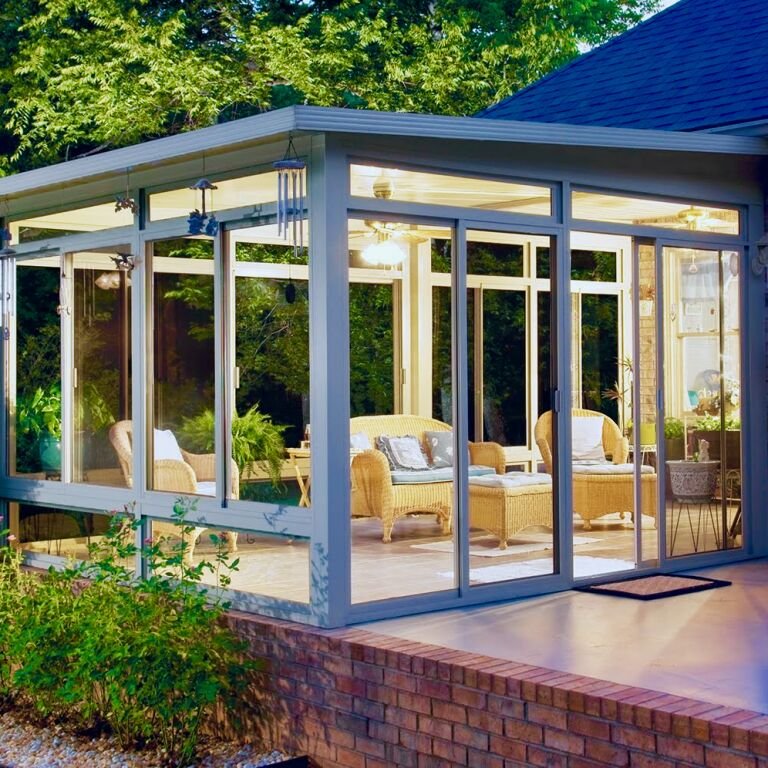
A four season room is built like a room addition that happens to have a lot of glass. Dual-pane insulated glass walls. An insulated roof. A dedicated HVAC tie-in or mini-split. The frame is still aluminum, the glass is sealed, and the room holds climate year-round.
What it is:
- Year-round living space usable in every season, including July and January
- Treated by appraisers (usually) as added square footage of conditioned living space
- Can tie into your home’s existing HVAC or run on a mini-split
- Weather-tight: handles Gulf Coast rain, humidity, and the occasional cold front
What it costs you:
- Roughly 1.5x to 2x the four-figure delta of a comparable three-season room
- Longer build (6 to 10 weeks typical, HVAC install extends the schedule)
- Higher permit review (treated like a conditioned-space addition in most Gulf Coast cities)
- Ongoing electric bills — a 300 sq ft four season room runs a small AC load year-round
Cost Comparison: Same Footprint, Both Types
Here are 2026 Texas Gulf Coast ranges for a 300 sq ft room (roughly 15’×20′) built to code, with engineer-sealed plans:
| Factor | Three Season Room | Four Season Room |
|---|---|---|
| Typical cost range | $25,000 – $55,000 | $55,000 – $110,000+ |
| Per square foot | $85 – $185 /sq ft | $185 – $375 /sq ft |
| Walls | Screen or single-pane glass | Dual-pane insulated glass |
| Roof | Uninsulated or lightly insulated | Fully insulated |
| Climate control | Fans + portable heater | Tied to home HVAC or mini-split |
| Build time | 4 – 8 weeks | 6 – 10 weeks |
| Months fully usable (Houston) | ~7 months (Oct–Apr) | 12 months |
The per-month-usable math is a useful lens. $40,000 for a three season room over 7 usable months = $5,700 per usable month over the first year. $80,000 for a four season room over 12 months = $6,700 per usable month. Not far apart — IF you’ll actually use the space in July.
Climate Check: Can a Three Season Room Survive a Houston Summer?
The honest answer: it survives, but you probably won’t want to be in it.
From roughly June through mid-September on the Gulf Coast, a three season room interior will run 85–95°F during daylight hours and stay 80°+ until well past sunset. Ceiling fans help with air movement. They do not help with heat.
Workarounds homeowners actually use:
- Mini-split retrofit. A 9,000 BTU ductless mini-split installed in a three season room runs $3,000–$5,000 and makes the room usable in summer. At that point, your three season room is a budget four season room with lower-grade walls — fine for some use cases, misleading in appraisal terms.
- Evening-only use. Honest and effective. The room is your sunset dining space, not your daytime office.
- Attached to a shaded side of the house. North and east exposures run 10–15° cooler than south and west. If the room will be a summer evening space, exposure matters more than roof grade.
If you’re building primarily for peak-summer use, skip the three-season tier. The retrofit cost erases the savings and the result is still thermally weaker than a purpose-built four season room.
Which Should You Choose? Decision Checklist by Use Case
Build a three season room if:
- You want evening dining or outdoor entertaining space from October through May
- Your pool is nearby and the room is a bug-free poolside lounge
- Budget is $25K–$55K and that’s firm
- You’re OK with a space that is unused or lightly used in peak summer
- Your HOA won’t approve a larger architectural footprint for a conditioned-space addition
Build a four season room if:
- You want year-round use, including Houston July and January cold snaps
- You’re using the room as a home office, art studio, or secondary living room
- You want the appraisal benefit of added conditioned living square footage
- Budget is $55K–$110K+ and the long-run value justifies it
- You expect to stay in the house 5+ years (the ROI math requires time)
Consider a screen room or screen porch instead if:
- Bug control is your primary goal, not climate control
- Budget is below $25K
- Rain protection isn’t critical (screen walls let rain through — plan for that)
Consider a pool screen enclosure if:
- The main use is screening the pool and deck, not creating an indoor room
- You want the lowest-cost path to a bug-free, debris-free outdoor space
What SHD Builds in Each Tier
Simmons Home Design builds both three-season and four-season rooms across Greater Houston, Brazoria County, Galveston County, Clear Lake, and the Texas Gulf Coast.
Every build includes:
- Engineer-sealed plans for your exact address, filed with your city permit office
- Structural 6061-T6 or 6063-T6 aluminum framing
- Stainless steel fasteners (galvanized rusts near salt air)
- HOA packet preparation when your neighborhood requires architectural review
- Line-itemed quotes — foundation, framing, glass or screen, roof, electrical, HVAC separately
- 5-year labor and workmanship warranty
- Limited lifetime warranty on the structural aluminum frame
What’s different by tier: three-season rooms use single-pane glass or Phifer screen walls and uninsulated roof panels. Four-season rooms use dual-pane insulated glass with Low-E coatings, insulated roof panels, and an HVAC tie-in or mini-split spec.
Not sure which tier fits your home?
Simmons Home Design will walk your yard, look at your exposure and use case, and quote both options line by line — so you can see the trade-off in real numbers for your specific address.
Call Wayne direct: 346-617-4031
What Our Houston & Gulf Coast Customers Say


Frequently Asked Questions
What’s the main difference between a three season and four season room?
A three season room is uninsulated or lightly insulated — single-pane glass or screen walls, uninsulated roof, no HVAC. It’s usable from roughly October through May on the Gulf Coast. A four season room has dual-pane insulated glass, an insulated roof, and dedicated HVAC. It’s year-round conditioned living space. The cost difference is typically $25,000–$55,000+ for the same footprint.
Can I convert a three season room into a four season room later?
Partially, yes. You can add a mini-split for climate control ($3,000–$5,000) and upgrade the glass later. But you cannot cost-effectively upgrade the roof insulation or add dual-pane sealed glass to a frame built for single-pane. For year-round use, build a four season room from the start — the upgrade path doesn’t fully close the gap.
Will a three season room be usable in Houston summer?
With the walls or roof as originally built, no — interior temps run 85–95°F during daylight hours June through September. A mini-split retrofit makes it usable, but at that point you’ve effectively built a four season room with weaker walls. If peak-summer use matters, build four season from the start.
Does a four season room count as added square footage for appraisals?
Usually yes — if it has dual-pane insulated glass, an insulated roof, and dedicated HVAC that holds the room at the same temperature as the rest of the home. Three season rooms are usually not counted as conditioned living space in Texas appraisals. Confirm with your lender and appraiser before committing to a tier.
What’s the cost per square foot in Texas for each type?
In 2026 on the Texas Gulf Coast, three season rooms run roughly $85–$185 per square foot all-in. Four season rooms run $185–$375 per square foot. The ranges reflect size, roof style, glass grade, foundation type, and whether the project triggers full HVAC rework at the home’s panel.
How long does each type take to build?
Three season rooms typically take 4 to 8 weeks from signed contract to final inspection. Four season rooms take 6 to 10 weeks because the HVAC tie-in or mini-split install adds a week or two. Both timelines are driven mostly by engineering turnaround, permits, and HOA review — not the build itself.
What’s the warranty on a Simmons Home Design three or four season room?
Both tiers come with a 5-year labor and workmanship warranty and a limited lifetime warranty on the structural aluminum frame. Glass and screen come with their manufacturer warranties (dual-pane IG units typically 10 years, Phifer screen 3 years standard or 10 years upgraded).
Ready for a line-itemed quote on both tiers?
We build three-season and four-season rooms across Greater Houston, Brazoria County, Galveston County, Clear Lake, and the Texas Gulf Coast — engineer-drawn for your address.
Call Wayne direct: 346-617-4031